
NEWS
U.S. and EU Strike Tariff Agreement, Reshaping Transatlantic Trade

Washington, D.C. — The United States and the European Union have reached a breakthrough tariff trade agreement aimed at reducing bilateral trade barriers, streamlining regulatory procedures, and stabilizing a trading relationship that accounts for over $1 trillion in annual goods flow.
The deal, announced jointly by the Office of the U.S. Trade Representative and the European Commission, comes after nearly two years of negotiations and marks the most comprehensive transatlantic trade accord since the U.S.–EU Mutual Recognition Agreement of 1998.
A Timely Pact Amid Global Trade Volatility
The agreement arrives at a critical moment. Global supply chains remain vulnerable to geopolitical friction, rising protectionism, and shipping bottlenecks. By cementing a structured and rules-based trade relationship, both sides are looking to anchor stability into their economic corridors while signaling a renewed commitment to liberal trade norms.
“This deal reflects our shared commitment to deepening transatlantic economic cooperation,” said U.S. Trade Representative Katherine Tai. “It reduces unnecessary costs, increases predictability for businesses, and sets the stage for resilient supply chains across the Atlantic.”
Key Provisions of the Agreement
The U.S.–EU pact covers a range of cross-sector trade facilitation measures:
- Tariff reductions: Immediate or phased elimination of import duties on select industrial goods, chemicals, pharmaceuticals, and processed foods.
- Digital documentation standardization: Alignment on the use of electronic bills of lading (e-BL), automated customs declarations, and interoperable trade data platforms.
- Regulatory harmonization: Simplified technical standards and mutual recognition of product conformity assessments.
- Dispute resolution modernization: A faster and more transparent mechanism to address trade grievances between exporters, regulators, and customs agencies.
According to officials, more than 4,000 product lines will be affected by the new tariff rules, with particular benefits expected for small- and mid-sized exporters in both jurisdictions.

Impact on U.S. Trade and Logistics
The deal is projected to deliver cost savings and efficiency gains for U.S. manufacturers, shippers, and logistics service providers that operate in transatlantic markets.
- Reduced landed costs: With lower tariffs, U.S. firms importing raw materials or components from the EU will benefit from leaner cost structures.
- Export momentum: American-made goods—especially in advanced machinery, aerospace parts, and agricultural value-added products—will gain better access to EU markets.
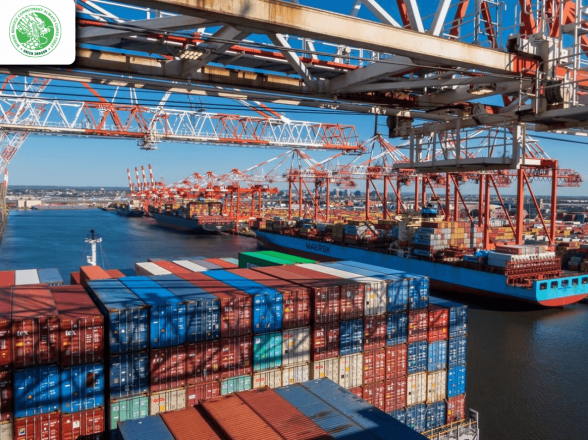
- Port volume gains: Major East Coast ports like New York/New Jersey and Savannah are expected to see increased TEU throughput from streamlined two-way flows.
“This agreement is a win for U.S. competitiveness,” said a senior analyst at the Peterson Institute. “It brings legal clarity, customs predictability, and repositions the U.S. as a stable trading partner at a time when global trade governance is under stress.”
Private Sector Response
Initial reactions from the private sector have been positive. The National Association of Manufacturers (NAM) issued a statement supporting the deal’s emphasis on regulatory transparency and e-document adoption, which are seen as catalysts for greater supply chain visibility and risk reduction.
In the logistics industry, the agreement is expected to accelerate digital transformation across ocean freight, air cargo, and multimodal transport, especially for U.S.-based freight forwarders with operations in both markets.
Strategic Implications
Analysts view the agreement as more than just an economic arrangement. It is a strategic move by the U.S. to:
- Reassert leadership in trade rulemaking amid rising influence from non-market economies.
- Encourage digital standard-setting in customs and trade finance.
- Reinforce transatlantic cooperation as a counterbalance to fragmented global trade blocs.
The pact also arrives amid efforts by the Biden administration to rebuild trust with U.S. allies, move away from unilateral tariff escalation policies, and pursue a more partnership-driven economic diplomacy.
What Comes Next
Implementation of the agreement will occur in phases over the next 12 to 24 months. U.S. Customs and Border Protection (CBP) is expected to release detailed guidance on revised tariff schedules and product classifications.
Businesses are being advised to:
- Review impacted HS codes and origin rules
- Update shipping contracts and INCOTERMS
- Integrate digital tools to align with new customs protocols
Conclusion
The U.S.–EU tariff trade agreement represents a significant reset in global trade dynamics—one that prioritizes transparency, resilience, and digital readiness.
For U.S. firms engaged in transatlantic trade, this is not merely a compliance update, but a competitive inflection point. Those who respond swiftly—by digitizing workflows, revalidating sourcing strategies, and building deeper Europe-facing logistics partnerships—stand to benefit most.
? For strategic consultation on transatlantic logistics planning, connect with the Green Dragon Logistics policy desk.






















Recent Comments